
It’s 4 p.m., and my inbox is a graveyard of emails that feel important but probably aren’t—digital paperweights holding down nothing but my will to live. The world spins on. Whether I reply today or tomorrow won’t matter to anyone, least of all me.
Earlier, I take my mother to the doctor. Routine physical, except when you’re ninety, “routine” means answering questions like: Can you trim your toenails? How’s your appetite? Any suicidal thoughts?
I wait in the lobby—partly to give her privacy, partly because there are things I don’t need to know about my mother’s body at this stage. I make small talk with strangers, listen to their ailments like they’re swapping campfire stories. I pass the time like a man passing kidney stones: slowly, painfully, with forced politeness.
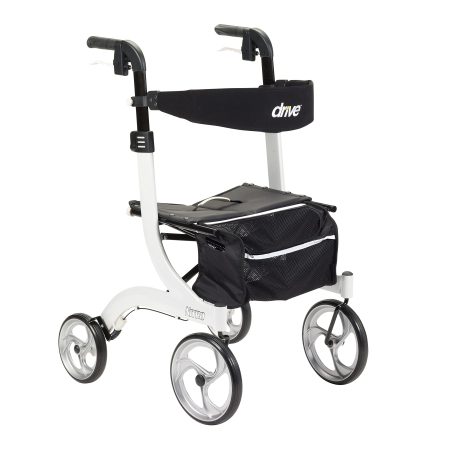
Two hours later, Mom emerges, gripping her walker (“Drive” model—cruel irony) like it’s the reins of a racehorse. She inches down the hallway, brakes squealing like a parade float with trust issues.
At checkout, the receptionist thanks her. Mom nods absently, already strategizing lunch. I’m handed her next appointment slip like a prophecy.
Then comes the work of: hoisting her into my lifted truck. Toolboxes become makeshift stairs. Same drama every time. Up she goes, barking orders and prayers in equal measure:
“Wilhelm! Hold this! Not so fast! Sweet Jesus, watch it!”
Finally seated, she launches a forensic audit of my cab—receipts, parking stubs, the breadcrumbs of my chaos. She squints at one. “You went to In-N-Out Burger?”
“Part of my balanced diet.”
“I haven’t had that in ages,” she says in Spanish—half hint, half hypnosis.
I spring the trap. “Wanna go?”
“No, no, it’s okay,” she waves. Which, in Mother Language, means: We’re going. Now.
At the drive-thru, she’s giddy, quiet—happy as a snake on sun-warmed pavement. Over burgers, she recycles stories about my father, the same ones I’ve heard a thousand times. But I listen like it’s the first. I ask better questions. I let her linger in the past a little longer. Her best life was always somewhere between her husband and her kids.
Back at her home, I move to hop out when her hand stops me.
“Wait. I have something for you.”
From a paper bag tied with makeshift ribbons, she pulls relics of my childhood: a hideous Hummel knockoff I bought her with lawn-mowing money, a Navajo necklace, a crucifix, a tiny jackknife. Things I gave her decades ago. Things she’s carried like sacred clutter.
Then—the finale: a yellowed scrap of paper, 3×3, my eleven-year-old scrawl in red marker: ACTS (Adoration. Confession. Thanksgiving. Supplication). Something I picked up at Bible camp. A prayer formula I’ve long forgotten.
Before I can explain, she launches into her own interpretation—what each word means, how they’ve guided her. She has no idea it’s an acronym. Doesn’t need to. She’s lived it—heavy on the adoration, overflowing with thanks. Me? I always skip straight to the asking (Supplication).
I smile, don’t speak. One wrong move and the tears win.
Then I ask: “How’d you answer that last question, Mom?” (The suicidal one.)
She laughs. “Honestly?”
“No. Lie to me.”
She laughs harder. “Of course I said no. But you know…”
I do know. I know the loneliness she’s carried since Dad died, how even that demon parrot she buried last month kept her tethered to the world.
“Mom, I’m a phone call away. Or a few minutes, traffic permitting.”
She pats my hand. “I know. You’re a good son. But you’ve got your own problems.”
I nod. “Who doesn’t?”
She opens the door. Conversation over.
I stack the boxes(the ‘stairs’), guide her down via her ritual of blessings/curses (still not sure which is which), and position her behind “Drive.” I give her a push up the path. She doesn’t look back—just waves and vanishes behind the gate.
I stare at the walkway. Same one I helped my father build in ’82. Back when things felt simple. Or maybe I was just simple.
“ACTS,” I mutter.
For me, a prayer checklist. For her, a life well lived. Mostly adoration. Mostly thanks.
 BB Grey--musings
Leave a comment