
I had given myself a week to understand dying this time around. The news arrived with a percentage—fifty-fifty—which meant either everything or nothing, depending on how I chose to look at things as they stood.
There would be no worrying about having saved enough, no being a burden to my children and what remained of my family, no heaviness of not having “made it” according to whatever metric we’re supposed to measure our lives against. With any luck I’d go fast, the way my old man did. Sure, he tried to fight it. Ultimately he lost. At the end of the three-year battle, after he had surrendered all the parts of him that he had given voluntarily or that had been cut away, he looked at me with eyes glossed with the film of unshed tears, red-rimmed, refusing to blink for fear of what blinking might release. A smile covered a trembling lower lip. His face had gone ashen, lines carved by time telling anyone who looked the story of a life.
He held out his hand, mustering all the strength and courage left in him to stand—because that is what a man did when another person entered the room. He waited until our glances locked, galvanizing the moment. He knew I would recount this many times after he left. He wanted me to get it right.
“This is where we say goodbye.”
He knew. And he did. He said nothing more. The weeks leading to this day, and the three years prior with his gift-giving, calls in the middle of the day, and unannounced visits had been saying it all. It was a curtain call.
He sat back down, everything in him leaving with the exhaling of those words. He said he needed to rest. I honored his request and left the family room where he had made base camp for his final ascent. In the kitchen, my mother’s face—iron until then, incapable of any more crying—cracked. She said to me in Spanish, “Gracias mijo. Está cansado, te hablo después.”
Her call that evening told me he had laid down, that he was no longer opening his eyes or responding, though he was still breathing, his heart still beating. The hospice nurse said, “This is likely it. The last bit of life.” She had seen this before. It would be a matter of moments, hours, at most a few days.
I returned the next morning with my brother and sister. As we talked to him while he lay motionless, we shared stories—images and scenes we remembered him liking. We laughed over swallowed gulps and tears, the smiles holding back the inevitable crash into sobs. I thought of the biblical tearing of cloth and beating of breast, which had seemed exaggerated when I’d read of such grief. I couldn’t imagine what those passages meant until then. Somehow they fit.
My brother and sister left to handle a detail with the burial plot. I watched him, with my mother beside me, take his final breath and release a sound I wish I had never heard—hollow and otherworldly. I felt honored that my mother and I were there for his last moment on earth, even if it was only the exhale of his dying.
That was my father’s death. I know he hurt and suffered. But now, almost twenty-four years later, as I witness my mother’s struggles with doctors and nurses who don’t listen, and insurance companies who deny what is plainly so, going the way my father went doesn’t seem all that bad.
Somewhere between these two endings is where I think I might have liked my story to end. But we can’t always write our own ending. We can only tell it.
The week of accommodating my fear was over. It was the start of a new week. I would go on my daily walk, attend church, plan the days ahead, watch football. I would start organizing, discarding all those things stored in boxes that had seemed important to keep. Now, years later, with time distorting the very contents, I wondered what those hidden objects would say without me there to interpret them.
Funny how things we think valuable only hold value if there is a willing buyer. The economic theory of worth can be answered with a single phrase: what someone is willing to pay. When you’re taking inventory at the end and the rules become clearly defined—filtered not through “what if” but through “what is”—you realize their worth was only ever what you were willing to pay, because no one else would pay the same.
But then there was the reality of possibly living. The test results were only that—results indicating that if “a” occurs, then “b” is likely at a fifty-percent rate. But even if “b” materialized, there were scenarios that ended in living and others that ended in dying. I knew the mathematics of such problems, the statistical sleight of hand I could use to see results however I wanted.
But tomorrow would still summon me to work. The bills would keep arriving. They would not accept probability as an excuse. I could not sit and wait.
This week was my waiting, my processing. It hit me the way it did when I was twelve and Carl Johnson walked over to me. He was on the sidewalk with his friends. I had stopped at the intersection, waiting for traffic, when Carl approached without warning and punched me in the face with all his strength. I remember his feet leaving the ground at impact.
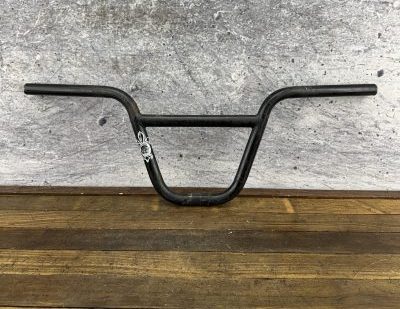
I wobbled, both hands still gripping the handlebars. Shock, disbelief, humiliation, and confusion arrived simultaneously. I stood there. He walked away with the same swagger he’d approached with. No celebration, no laughter, nothing. Even now, decades later, never having shared this with anyone, it seems almost fabricated. As though it didn’t happen. But it did.
I remember standing there, heat spreading across my face, my jaw feeling exposed to air. I didn’t reach up to touch it, afraid I’d lose balance. The handlebars steadied me.
The test results felt like that. This week was me standing there, steadying myself, grateful I hadn’t fallen, considering whether to get back on the bike, walk the rest of the way, or pedal furiously and catch up to Carl Johnson, leaving tire treads across his back, his body a speed bump I’d feel but keep rolling over.
Keep rolling.
The human condition, in whatever form it takes, answers most questions set before us. It doesn’t ask for details or explanations. It insists only on the going.
So this week I will keep going. I’ll sort through boxes and discard the accumulated debris I’ve hauled from one home to another over the years. I’ve heard you don’t need possessions in heaven. That you leave the way you entered—naked and alone.


 BB Grey--musings
Leave a reply to bb grey Cancel reply